

SCAN THE BARCODE TO AVAIL FREE SERVICES:
-
.png) Diet plan.
Diet plan.
-
Calorie counter.
-
Step / physical activity counter.
-
Gut friendly recipies.
-
Yoga exercises content.

Gut Conditions And Food Intolerances
Gut conditions and food intolerances are interconnected issues that can significantly affect an individual's overall health and well-being. A hydrogen breath test (or HBT) is used as a diagnostic tool for small intestine bacterial overgrowth and carbohydrate malabsorption, such as lactose, fructose, and sorbitol malabsorption. The test is simple, non-invasive, and is performed after a short period of fasting (typically 8–12 hours).
Food Intolerances:
Food intolerances occur when the body is unable to properly digest certain foods or food components, leading to a range of symptoms. Common intolerances include:
1. Lactose Intolerance:
- Inability to digest lactose, a sugar found in milk and dairy products, due to insufficient levels of the enzyme lactase.
- Symptoms include bloating, diarrhea, and gas after consuming dairy.
2. Fructose Malabsorption:
- Difficulty absorbing fructose, a sugar found in many fruits, vegetables, and sweeteners.
- Symptoms include abdominal pain, bloating, and diarrhea.
- Consume foods rich in omega-3 fatty acids.

Hydrogen Breath Test:
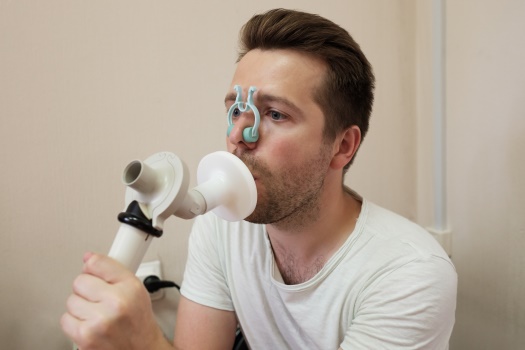
Breath test is quicker and non-invasive compared to more traditional methods, such as a blood test. The bacteria in your gut will produce more hydrogen and/or methane when it is reacting badly to something you have ingested Breath Testing can help reach a diagnosis for:
Hydrogen Breath Tests:
- Lactose breath test - for lactose intolerance (lactase deficiency)
- Fructose breath test - for fructose intolerance
- Sorbitol breath test - for sorbitol intolerance
- Mannitol breath test - for mannitol intolerance
- Sucrose breath test - for sucrose intolerance (sucrase-isomaltose deficiency)
Common dietary sugars such as lactose and fructose are normally absorbed in the small intestine. However, some people do not completely absorb these sugars and they pass into the colon (large intestine) where they are fermented by bacteria to produce either hydrogen (H2) or methane (CH4) gas, or a combination of both. In FODMAP intolerance an orally ingested test sugar will be incompletely absorbed in the small intestine, leading to fermentation and gas production in the colon. These gases are absorbed into the bloodstream and expired via the lungs, allowing detection by breath testing. As these gases are not produced by humans, they are evidence of sugar fermentation by intestinal bacteria and hence breath tests are highly specific. Intolerance and SIBO is indicated by a significant rise in breath hydrogen or methane levels above baseline during the test. As a quantitative test it can also provide some information on the degree of intolerance.
| Lactose Intolerance Test | Lactulose Intolerance Test |
|---|---|
| Intolerance of milk, dairy products, pastries or chocolate | Establishing oro-cecal transit time |
| Suspected primary or secondary lactose intolerance | Establishing non-H2-producers |
| Investigation of irritable bowel syndrome | Small intestine bacterial overgrowth (SIBO) |
| Investigation of bloating, meteorism, flatulence, diarrhea, steatorrhea (fatty stools) | Investigation of constipation |
| Monitoring celiac disease and other conditions with villous atrophy if primary LI has been | |
| excluded via molecular genetic tests | |
| Chronic inflammatory bowel diseases (often combined with carbohydrate malabsorption) |
| Fructose Intolerance Test | Glucose Intolerance Test |
|---|---|
| Intolerance of sweets, honey, or fruits | Intolerance of sugar and sweets |
| Intolerance of sugar and sweets | Suspected SIBO |
| Investigation of irritable bowel syndrome | Exocrine pancreatic insufficiency |
| Exocrine pancreatic insufficiency | Cirrhosis of the liver |
| Monitoring celiac disease and other conditions that may be associated with villous atrophy | Secondary lactose intolerance |
| Chronic inflammatory bowel diseases (often combined with carbohydrate malabsorption) | Irritable bowel syndrome |
| Sorbitol Intolerance Test | Xylitol Intolerance Test |
|---|---|
| Intolerance of sweets, diabetic products and honey | Suspected xylitol intolerance (intolerance of chewing gum, boiled sweets etc.) |
| Intolerance of fruit, berries | Investigation of sweets, diabetic products or processed food that is labeled ‘sugar-free’ |
| Suspected sorbitol intolerance (intolerance of chewing gum, boiled sweets etc.) | Borderline positive result in the fructose tolerance test and/or sorbitol tolerance test |
| Borderline positive result in the fructose tolerance test | Investigation of bloating, meteorism, flatulence |
| Investigation of irritable bowel syndrome | Investigation of diarrhea or chronically recurring bouts of diarrhea |
| Investigation of bloating, meteorism, flatulence | Investigation of steatorrhea (fatty stools) |
| Investigation of diarrhea or chronically recurring bouts of diarrhea | Investigation of ‘therapy refractory’ celiac disease and similar conditions that may villous atrophy |
| Investigation of steatorrhea (fatty stools) | |
| Investigation of celiac disease and other conditions that may accompany villous atrophy | Chronic inflammatory bowel disease (are often associated with CH malabsorption) |
Management strategies may include:
Common dietary sugars such as lactose and fructose are normally absorbed in the small intestine. However, some people do not completely absorb these sugars and they pass into the colon (large intestine) where they are fermented by bacteria to produce either hydrogen (H2) or methane (CH4) gas, or a combination of both.
- Diet Modification: Identifying and avoiding trigger foods.
- Probiotics and Prebiotics: Supporting gut health with beneficial bacteria and dietary fibers.
- Medications: Anti-inflammatory drugs, antidiarrheals, or probiotics, depending on the condition.
- Lifestyle Changes: Stress management techniques, exercise, and adequate hydration.

Conclusion
To aid in the detection of gastro-intestinal disorders Investigate functional gut conditions:
Food intolerances, SIBO, IBS
Disclaimer: The Gut Health Score Report is for wellness and educational purposes only, not medical diagnosis or treatment. Consult a qualified healthcare professional before making health changes. The creators disclaim liability for actions based on this report. Users are responsible for decisions made with professional guidance.
